Contact Address Details:

ITC
- Gambia
Kerr Sering (Ker Serign)
PMB 14, Banjul
The Gambia, West Africa
Telephone number:
+220 4462928 (Director)
4463423
4460155
(lab one)
4460150
(FAO Dairy Coordinator)
4460154
(Regional Research)
4461576
(Senior House)
4462928
(Regional Coordinator)
Fax:
+220 4462924
|
|
Information:
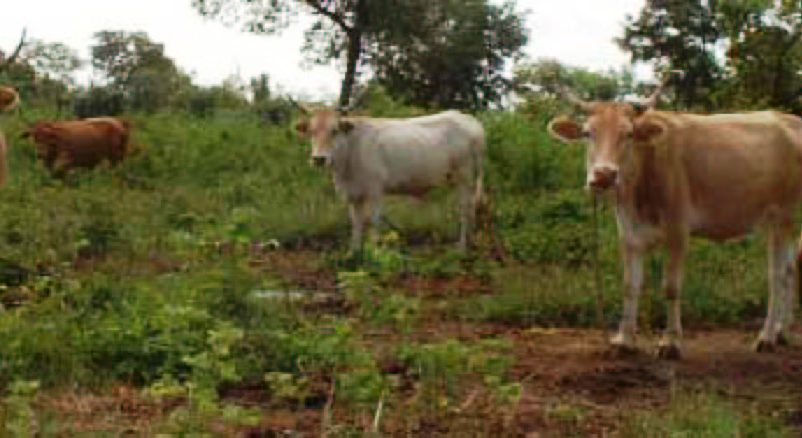
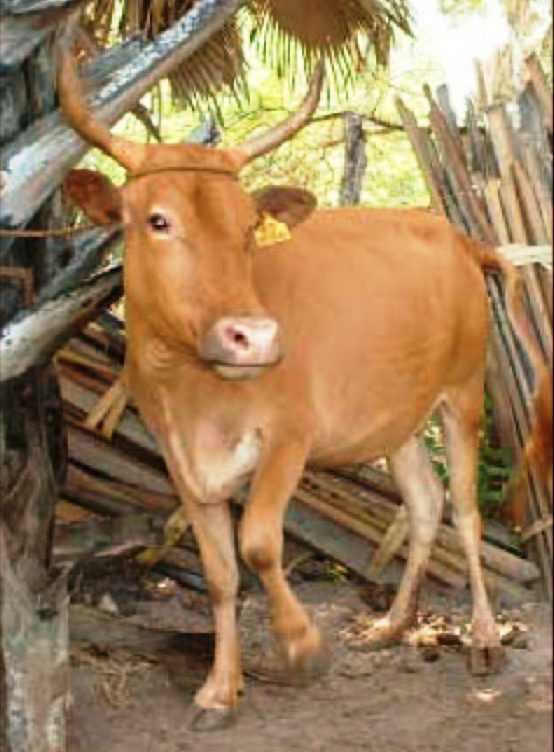
 The International Trypanotolerance Centre is an independent,
non-profit research body which was set up by the National
Assembly in 1982 with the main original objective to research
and multiply the unique N'Dama cattle breed in their
traditional region of West Africa.
The International Trypanotolerance Centre is an independent,
non-profit research body which was set up by the National
Assembly in 1982 with the main original objective to research
and multiply the unique N'Dama cattle breed in their
traditional region of West Africa.
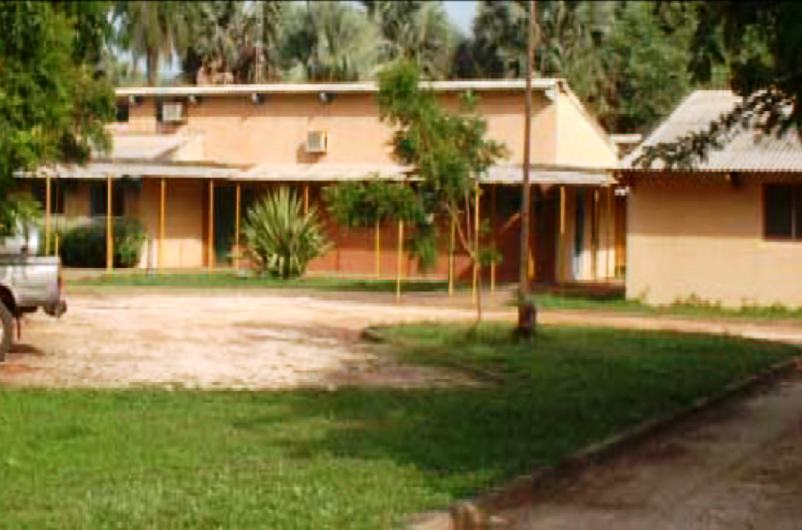
 At
its Headquarters near Banjul and the two field stations at
Keneba and Bansang, the Centre disposes of extensive laboratory
and animal facilities, herds/flocks of indigenous large and
small ruminant breeds, and a demonstration and training infrastructure. At
its Headquarters near Banjul and the two field stations at
Keneba and Bansang, the Centre disposes of extensive laboratory
and animal facilities, herds/flocks of indigenous large and
small ruminant breeds, and a demonstration and training infrastructure.
The cattle of ITC were originally distributed in many herds all over The Gambia
and the transformation of that cattle stock to a nucleus breeding
unit in 2 sites took some time especially until all the necessary
recording of pedigrees and performance testing was put together.
were originally distributed in many herds all over The Gambia
and the transformation of that cattle stock to a nucleus breeding
unit in 2 sites took some time especially until all the necessary
recording of pedigrees and performance testing was put together.
Funding:
The following governments and international organisations
fund the centre's research work: European Union, FAO,
Belgian & Gambian Governments & the IDRC,
BMZ/GTZ/CIM.
 Objectives:
The general objective
of the ITC is the formulation, implementation and introduction of
sustainable socio-economic and environmentally acceptable integrated
packages at farmer level, for improved livestock health, production
and exploitation.
Definition:
The definition of
Trypanotolerance is the ability of some livestock breeds to survive,
reproduce and produce in tsetse trypanosome infested locations where
others breeds cannot, without having to use veterinary drugs.
R&D:
The centres' Research &
Development objectives is in line with and relevant to the present
policies of West African governments. It also runs along with the core
values of CORAF/WECARD. Main partners in the implementation of R&D are
the National Agricultural Research Institutions (NARS).
R&D
agenda, has three main programmes:
LISIP
(Low-Input Systems Improvement Program)
Objectives:
To improve the efficiency of livestock-based farming systems through the deployment of improved technological options
based on better exploitation of adaptive traits of indigenous
livestock.
systems through the deployment of improved technological options
based on better exploitation of adaptive traits of indigenous
livestock.
Institutional Projects:
1. Disease risk Assessment -
Quantifies disease risk and and generate decision support systems as
aids for choice of control strategies.
2. Disease control strategies
Design integrated vector and parasite control measures and estimate
impact of disease on production.
3. Disease resistance and stability -
Identifies and reduces impact of stress factors on disease resistance.
4. Crop, agroforestry, livestock integration -
Improve efficiency of total system through nutrient recycling.
5. Pure – breeding of indigenous disease-resistant stock.
MOSIP
(Market-Oriented Systems Improvement Program)
Objectives:
Improve the economic efficiency of medium to high input systems
through optimisation of farm and market resources.
Institutional Projects:
1. Emerging systems for meat and milk Institutionalising
community-based participatory breeding programs to meet market demand
for Meat and milk in urban and high human population areas.
2. Feeding systems -
Strategies to better match feed and production requirements to
maximize outputs.
3. Biotechnology -
Use available biotechnological tools to improve efficiency of animal
production and processing.
SOLIP
(Systems’ Overlaps and Linkages Improvement Program)
Objectives:
Increase livestock productivity and sustainability and enhance outputs
of agricultural systems through adoption of technological options and
methods generated in partnership with NARS.
Institutional Projects:
1. Address public health and safety concerns from consumption of
livestock products -
Improve consumer confidence in livestock production, processing and
marketing systems through promotion of safety standards as recommended
by Codex Alimentarius
2. Socio – economics and policy aspects of livestock enterprises -
Evaluate economic profitability of improved technologies and clarify
role of key policy reforms in livestock enterprises
3. Capacity building and information exchange -
Increase region-wide critical mass for livestock-based R&D and improve
rate of technology Generation through networking and use of common
research methodologies
Laboratory Services:
• Entomology
• Parasitology
•
Serology, immunology
• Dairy & Meat Hygiene
• Feed
analysis
• Reproductive health
Farm & Other Services:
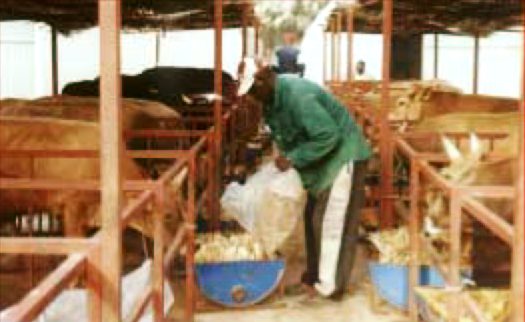
• Dairy Farm
Milking cows include a
herd of N'Dama X Holstein Friesian and N'Dama X Jersey. Pasteurised
milk on sale to the public.
•
Small Ruminant Research project
 maintains flocks of sheep
and goats which consists of Djallonk, West African Dwarf and F1
crosses with Sahelian breeds kept for experimental purposes at
Bansang and Kerr Serigne ITC stations maintains flocks of sheep
and goats which consists of Djallonk, West African Dwarf and F1
crosses with Sahelian breeds kept for experimental purposes at
Bansang and Kerr Serigne ITC stations
•
publications
•
Biological Statistics
•
Geographical Information Unit

|