• List of the best & worst beaches in
Gambia
 Northern Kombo:
 The
Gambia's best tourist beaches meander from the south bank edge
of the Gambia River at Cape Point (Cape of Saint Mary) to Brufut
village; encompassing resorts and hotels
in Bakau, Fajara, Kotu, Kololi, Kerr Serign and Bijilo. These
beaches are on a 12.5 km strip of wide and flat sandy shore, sometimes
backed by sand dunes, or narrow, sometimes rocky beachfront at
the bottom of low sandstone or steep laterite cliffs. Though you
will be hard pressed to find clear, turquoise seawater there are
some delightful spots to be discovered. The
Gambia's best tourist beaches meander from the south bank edge
of the Gambia River at Cape Point (Cape of Saint Mary) to Brufut
village; encompassing resorts and hotels
in Bakau, Fajara, Kotu, Kololi, Kerr Serign and Bijilo. These
beaches are on a 12.5 km strip of wide and flat sandy shore, sometimes
backed by sand dunes, or narrow, sometimes rocky beachfront at
the bottom of low sandstone or steep laterite cliffs. Though you
will be hard pressed to find clear, turquoise seawater there are
some delightful spots to be discovered.
 Strong
Atlantic Ocean currents buffet sand continuously resulting in
an ever changing shoreline and some tidal erosion hotspots, some
being repeatedly combated over the years with large volumes of
added sand and other measures. Further down the coast the beach
sand has avoided its worst effects. Strong
Atlantic Ocean currents buffet sand continuously resulting in
an ever changing shoreline and some tidal erosion hotspots, some
being repeatedly combated over the years with large volumes of
added sand and other measures. Further down the coast the beach
sand has avoided its worst effects.
Southern Kombo:
 The
Kombo South District has some of The Gambia's best, widest, most
deserted areas of beachfront. The shoreline around Tanji Village
is the worst however. It extends the total southern shore to between
50km to 56km (depending on measuring method, shifting sands &
date). This section of coastline
extends from Brufut Heights to Kartong, terminating at the mouth
of the Allahein River and is characterised by a number of seafront
lodges, sweeping shallow bays and lagoons, often adjacent to towering
fringes of rhun / coconut palm trees, baobabs, dune scrubland,
sand convolvulus and low sandstone ridges. The
Kombo South District has some of The Gambia's best, widest, most
deserted areas of beachfront. The shoreline around Tanji Village
is the worst however. It extends the total southern shore to between
50km to 56km (depending on measuring method, shifting sands &
date). This section of coastline
extends from Brufut Heights to Kartong, terminating at the mouth
of the Allahein River and is characterised by a number of seafront
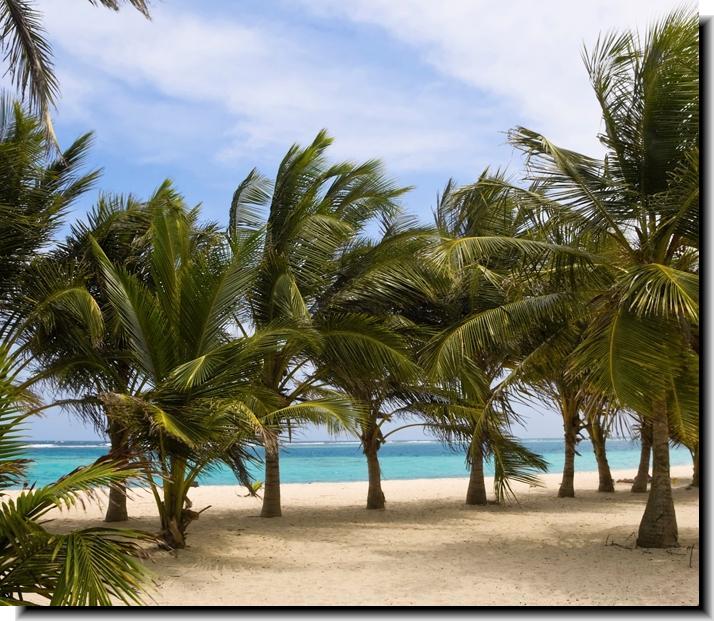
lodges, sweeping shallow bays and lagoons, often adjacent to towering
fringes of rhun / coconut palm trees, baobabs, dune scrubland,
sand convolvulus and low sandstone ridges.
 The
next place down from Brufut Heights is Ghana Town. A really smelly
place! Its seafront is a malodorous spot with piles of smashed
orange-pink Cymbium mollusc shells brought in by the boatload,
shelled and sold. The area is largely bypassed by visitors. Then
you arrive at an attractive lagoon, a bridge and Tanji Fishing
Village, a busy working oceanfront full of pirogues, smoking houses,
people and millions of darting flies! You need to move south about
500 metres to find a quiet stretch of beach. After here the beaches
grow more beautiful and rustic as you reach Batokunku, Tujering,
Sanyang, Gunjur and Kartong. The
next place down from Brufut Heights is Ghana Town. A really smelly
place! Its seafront is a malodorous spot with piles of smashed
orange-pink Cymbium mollusc shells brought in by the boatload,
shelled and sold. The area is largely bypassed by visitors. Then
you arrive at an attractive lagoon, a bridge and Tanji Fishing
Village, a busy working oceanfront full of pirogues, smoking houses,
people and millions of darting flies! You need to move south about
500 metres to find a quiet stretch of beach. After here the beaches
grow more beautiful and rustic as you reach Batokunku, Tujering,
Sanyang, Gunjur and Kartong.
 You can still find some fishermen in small pockets but most of
the beaches are largely untouched. Only a few of these areas see
the occasional tourist, while others have makeshift beach bars
thatched with dry grass or corrugated iron roofs and discreet
lodges where you can dine on fresh seafood or stay over for a
few days and enjoying tranquil evenings by open fire grills. Such
places usually have a limited selection of beers and spirits as
well as various fruit juices.
You can still find some fishermen in small pockets but most of
the beaches are largely untouched. Only a few of these areas see
the occasional tourist, while others have makeshift beach bars
thatched with dry grass or corrugated iron roofs and discreet
lodges where you can dine on fresh seafood or stay over for a
few days and enjoying tranquil evenings by open fire grills. Such
places usually have a limited selection of beers and spirits as
well as various fruit juices.
North Bank Region - Niumi:
Along the westernmost edge of the north bank of the river, in
the Niumi District, is a strip of land known as Jinack Island,
arguably the longest stretch of near deserted beach in The Gambia.
Most of its 10km of Atlantic facing beachfront only has the occasional
passing cattle or local villager. Most of its inhabitants live
in the northeast of the island while the Atlantic Ocean side is
largely uninhabited save for a few beach
lodges aimed at tourists.

|
|
 Bijilo Bijilo
 At
Bijilo, the odd fishing hub is separated by broad empty swathes
of sand. From here you can cycle or hike straddling the shore
all the way south to Kartong and the Allahein River which separates
Casamance in Senegal from The Gambia. At
Bijilo, the odd fishing hub is separated by broad empty swathes
of sand. From here you can cycle or hike straddling the shore
all the way south to Kartong and the Allahein River which separates
Casamance in Senegal from The Gambia.
Brufut
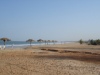 This
far down the coast the beaches have far fewer people and are more
appealing. You may see the occasional fishing boat parked on the
sand waiting for the next incoming tide and women separating the
recent catch. Starting at the top of a cliff and rolling down
to the sands you will find the Gambia Coral Beach Hotel &
Spa. Otherwise, large areas of the seafront are empty aside from
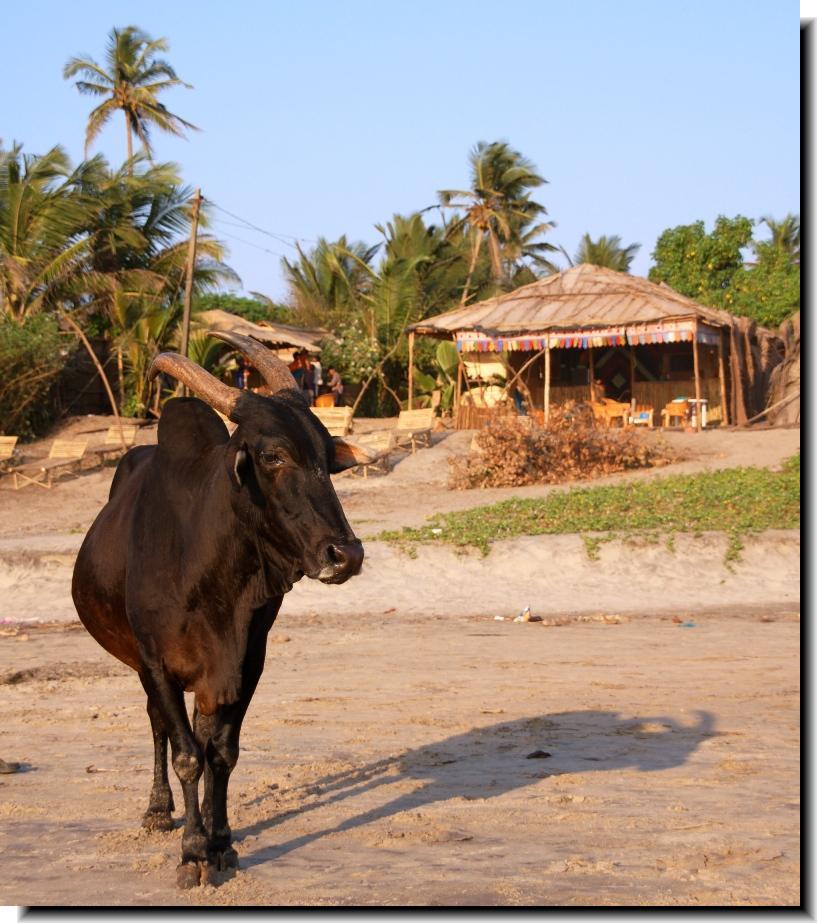
the occasional jogger, passing villager or the odd cow or two. This
far down the coast the beaches have far fewer people and are more
appealing. You may see the occasional fishing boat parked on the
sand waiting for the next incoming tide and women separating the
recent catch. Starting at the top of a cliff and rolling down
to the sands you will find the Gambia Coral Beach Hotel &
Spa. Otherwise, large areas of the seafront are empty aside from
the occasional jogger, passing villager or the odd cow or two.
On a cliff clearing at Brufut there is the sacred site of Senneh-Mentering
- a simple hut with a giant baobab tree, semi-encircled by tall,
proud rhun palms. You can still see graffiti carved in the trunk
by WW2 Allied soldiers as well as a large stone at the foot of
the tree for alms. People come here to offer prayers, gifts and
visit the local marabout. Only visit here escorted by a knowledgeable
local and with permission.
Cape Point
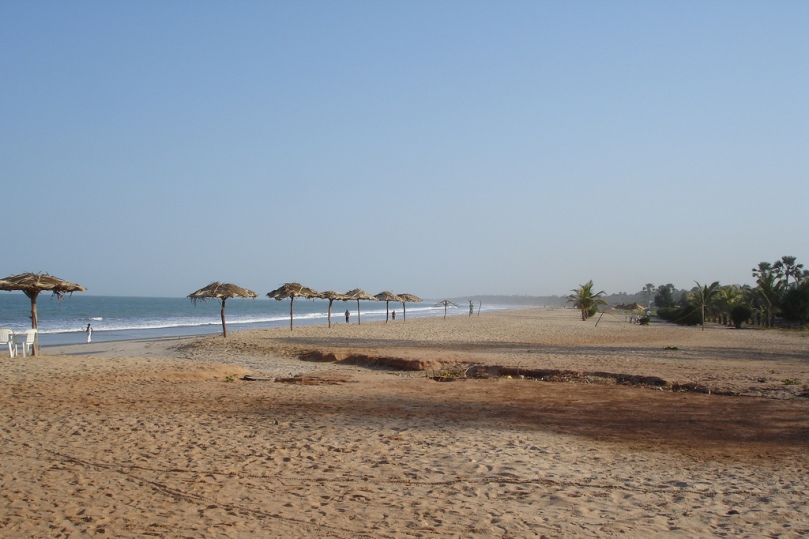
 This
is a wide stretch of desirable beige coloured beach, peppered
with fully-grown idyllic palm trees and ubiquitous thatched sun
shades nestled between plastic sun beds. There are quite a few
coastal bars and restaurants nearby and on the adjacent main road
(Kofi Annan Street). The sea / river currents can be strong here
so it's not usually recommended for swimming. Look out for the
lifeguard's flags. This
is a wide stretch of desirable beige coloured beach, peppered
with fully-grown idyllic palm trees and ubiquitous thatched sun
shades nestled between plastic sun beds. There are quite a few
coastal bars and restaurants nearby and on the adjacent main road
(Kofi Annan Street). The sea / river currents can be strong here
so it's not usually recommended for swimming. Look out for the
lifeguard's flags.
Fajara:
(Leybato Hotel oceanfront)
The beach here is flat, narrow at high tide and quite peaceful.
During the off-season weekdays this spot is among one of the quietest
stretches of beach in The Gambia's Kombo North. In the Mandinka
language 'Fajara' means "by the seashore". This is a
favourite place for many expats, VSO and Peace Corps volunteers
as it attracts far fewer bumsters
than its more tourist orientated neighbours to its north and south
at Cape Point and Kololi
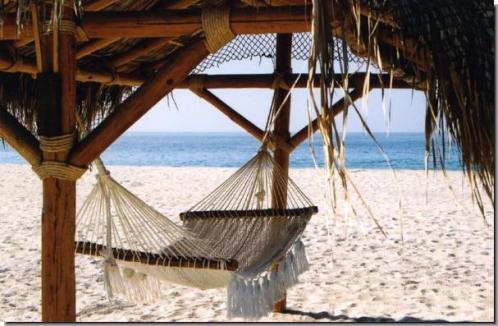
(Senegambia) respectively. Leybato offers relaxing hammocks under
the palms and shade for snoozing, taking in the sunset scenery
or reading. It also has a well-stocked restaurant serving professionally
prepared and presented food as well as a variety of soft and alcoholic
drinks.
To get to Leybato, follow the steep walkway at the T-junction
of Kairaba Avenue and Atlantic
Boulevard. The tree shaded dirt path goes up a hill and down the
other side; when you see a two storey apartment block keep going
to the left through an entrance gate, where you will see accommodation
huts on the left and a restaurant on the right; enter here to
access the beach.
A sandy path affording idyllic views from a cliff can be accessed
from the beach; take a right when you emerge from the shady restaurant
area and look for any of the several routes to get to the top
of the cliff where you will see a better trail. (The path ends
on Atlantic Road, by the NAWEC booster station and water tower.)
Gunjur
On either side of the Bator Sateh fishing centre Gunjur
offers one of the quietest beaches in The Gambia. Enjoy mile upon
mile of virtually unspoilt golden sands, occasionally interrupted
by boulders, rivulets and rock pools.
Jinack Island
This is a remote strip of land cut off from the mainland by a
creek, and is part of the Niumi National Park. The Atlantic side
of its 10 km stretch of beach is largely deserted and gloriously
unspoilt. Only a few small lodges intersperse the golden strand.
At low-tide the water is shallow and the sand flat, at high tide
the seawater laps up against the coastal vegetation. At night
you can see the lights of Banjul city twinkling from across the
wide, open bay.
Kartong
If you really want to get off-the-beaten-track then you should
consider travelling to the southernmost point of The Gambia to
the delightfully secluded beach adjacent to Kartong Village. The
seaside area is wonderfully unspoilt backed by sand dunes, scrub
and tropical trees teeming with wildlife
such as monkeys and birds. After a good spell of sunbathing there
are plenty of activities nearby and in the village itself such
as fishing, bird watching at the
Kartong Bird
Observatory, or visiting the local Lemonfish
Art Gallery which has a small guest house attached.
Kololi
 This
is a popular beach because of the large, tourist class Kairaba
and Senegambia hotels which are located at the end of the tourist
strip. Back before the early '80s the beach was superb. It has
over the years suffered from the ravages of tidal erosion. Efforts
have been made from time to time to replenish the sand and bring
it back to its former glory. So, depending on when this is done,
it can be described at various times as either a great beach or
a terrible one! However, to the north and south of the above hotels
sand conditions tend to be better. Large variations in sand cover
width over short distances are quite normal along the 'Smiling
Coast' of Africa. This
is a popular beach because of the large, tourist class Kairaba
and Senegambia hotels which are located at the end of the tourist
strip. Back before the early '80s the beach was superb. It has
over the years suffered from the ravages of tidal erosion. Efforts
have been made from time to time to replenish the sand and bring
it back to its former glory. So, depending on when this is done,
it can be described at various times as either a great beach or
a terrible one! However, to the north and south of the above hotels
sand conditions tend to be better. Large variations in sand cover
width over short distances are quite normal along the 'Smiling
Coast' of Africa.
Kotu
 To
the southwest of Fajara is Kotu. Here the topography of the land
flattens out and the beach becomes an open arc down towards Kololi
and Bijilo. During the tourist season the Kotu Strand area is
quite lively and popular with many locals. Nearby is the Kotu
Stream area which is where a creek runs into the sea and is more
subdued. To
the southwest of Fajara is Kotu. Here the topography of the land
flattens out and the beach becomes an open arc down towards Kololi
and Bijilo. During the tourist season the Kotu Strand area is
quite lively and popular with many locals. Nearby is the Kotu
Stream area which is where a creek runs into the sea and is more
subdued.
Sanyang
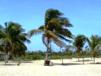 The
beach is about 30 km down the coast from the main resorts, making
a very enjoyable retreat for the day or half-day. If you choose
to go by taxi then remember that if you are dropped off at the
village it is several kilometres walk to the 'Paradise Beach'.
It may be better to go with a specialist ground tour operator
or hire a car / taxi for the day or half-day. The
beach is about 30 km down the coast from the main resorts, making
a very enjoyable retreat for the day or half-day. If you choose
to go by taxi then remember that if you are dropped off at the
village it is several kilometres walk to the 'Paradise Beach'.
It may be better to go with a specialist ground tour operator
or hire a car / taxi for the day or half-day.
Tanji
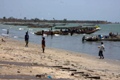 The
Tanji Village shoreline is the worst waterfront and is not suitable
for sunbathing. It is a working fish centre and the seawater tends
to have lots of flotsam and jetsam such as decaying fish, sea
snails, plastic products, discarded fishing nets and other rubbish.
You need to move further down from the bridge about 1/2 km from
the smoke houses to find a clean, decent area to relax and soak
in the sun. Just before the bridge are some nice lagoons as well
as an undisturbed bird reserve adjacent to the beach with virtually
no people. The
Tanji Village shoreline is the worst waterfront and is not suitable
for sunbathing. It is a working fish centre and the seawater tends
to have lots of flotsam and jetsam such as decaying fish, sea
snails, plastic products, discarded fishing nets and other rubbish.
You need to move further down from the bridge about 1/2 km from
the smoke houses to find a clean, decent area to relax and soak
in the sun. Just before the bridge are some nice lagoons as well
as an undisturbed bird reserve adjacent to the beach with virtually
no people.
Banjul
Capital
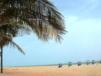 The city's beach in and around the island capital start from 'Town
Beach' to the northwest of Albert Market and continues in front
of Quadrangle ministries, the State House, RVTH, the Atlantic
Hotel and beyond, skirting the Banjul / Serrekunda Highway. The
Atlantic is the only tourist class accommodation in the city.
The beachfront continues beyond the bounds of the city proper,
past the old cemetery and continues west hugging the Banjul /
Serrekunda Highway up to Oyster Creek at Denton
Bridge. Between the capital and the bridge you can find some
splendid deserted beach and the occasional lagoon. The now defunct
Wadner and Palm Grove hotels used to lie just outside the city
and just before Denton Bridge respectively.
The city's beach in and around the island capital start from 'Town
Beach' to the northwest of Albert Market and continues in front
of Quadrangle ministries, the State House, RVTH, the Atlantic
Hotel and beyond, skirting the Banjul / Serrekunda Highway. The
Atlantic is the only tourist class accommodation in the city.
The beachfront continues beyond the bounds of the city proper,
past the old cemetery and continues west hugging the Banjul /
Serrekunda Highway up to Oyster Creek at Denton
Bridge. Between the capital and the bridge you can find some
splendid deserted beach and the occasional lagoon. The now defunct
Wadner and Palm Grove hotels used to lie just outside the city
and just before Denton Bridge respectively.
Swimming:
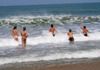 The
Kombo resort area is conveniently close to the ocean. Be warned
that the tides and currents along some of The Gambia's coastline
can be surprisingly powerful, and sandbars are common, though
the seawater is generally on the shallow side a good distance
from the beaches. The
Kombo resort area is conveniently close to the ocean. Be warned
that the tides and currents along some of The Gambia's coastline
can be surprisingly powerful, and sandbars are common, though
the seawater is generally on the shallow side a good distance
from the beaches.
There are only a few lifeguards in The Gambia, so use great caution
when swimming and it's not a good idea to go into the sea if you
have come by yourself. *Note: Before
swimming in any location do look out for the lifeguard warning
flags for current sea conditions. If you are caught in a riptide
current, try to swim parallel to the shoreline to escape it, and
then swim back towards the land.
In some zones the rocks can be quite jagged, so it is recommended
you avoid swimming or wading near visible boulders and crags.
The same eroded black sandstone offers a good opportunity for
dipping in tide pools, but avoid coming into contact with any
sea life such as snails, fish and crabs. Finally, never touch
any jellyfish, even if it is lifeless and washed-up on the sand,
it may still sting you seriously. |



 Travel & Tourism
Attractions / Excursions
Resorts
Travel & Tourism
Attractions / Excursions
Resorts