 |
 |
||||
 |
|
||||
| Arts & Crafts in Gambia | |||||
|---|---|---|---|---|---|
 |
|||||
 Artists Culture
& Traditions Dance
Artists Culture
& Traditions Dance |
|||||
|
|||||
|
Art Galleries Masks Music Shopping
|
|||||
|
|||||
 Arts & Crafts: Introduction:
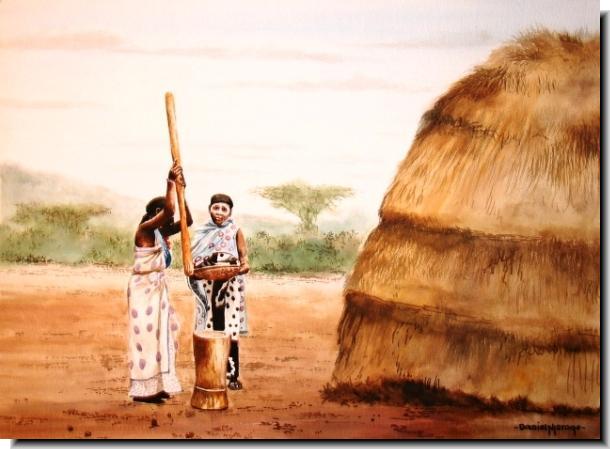 Within
the vicinity of most of the major tourist hotels
you will find a small craft market
(called bengdulas) made up of a number of small stalls offering a selection
of wood carvings featuring tribal masks, elephants,
hunters etc., batiks, tie dye
fabric prints, trade beads, gold and silver jewellery and locally made
hand woven baskets. Despite the influence of tourism in creating mass
production of such art (particularly in Brikama
Craft Market) you can still see authentic local handicrafts and
cultural dancing in the villages along the coast and the River
Gambia. Artworks can be found being peddled on the beaches
as well as in craft shops. Within
the vicinity of most of the major tourist hotels
you will find a small craft market
(called bengdulas) made up of a number of small stalls offering a selection
of wood carvings featuring tribal masks, elephants,
hunters etc., batiks, tie dye
fabric prints, trade beads, gold and silver jewellery and locally made
hand woven baskets. Despite the influence of tourism in creating mass
production of such art (particularly in Brikama
Craft Market) you can still see authentic local handicrafts and
cultural dancing in the villages along the coast and the River
Gambia. Artworks can be found being peddled on the beaches
as well as in craft shops.
 Batiks, Tie-Dye, Waxes & Damask Cloths:
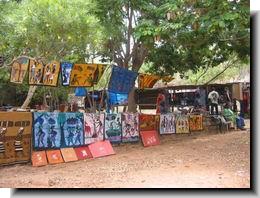
Gambian Tie dye and batiks are extravagant, rich in different shades of colour and are compulsory item to be seen at every tourist craft market and are tailored into men's Kaftans (haftans), women's warambas (grandmubas), skirts, shirts, ladies blouses, skirts as well as bed sheets, curtains and tablecloths. Many are made by local professional women who produce the finished fabrics from their own homes using hot dye, oil drums and various techniques to produce abstract designs as well as animals, natural objects and people.
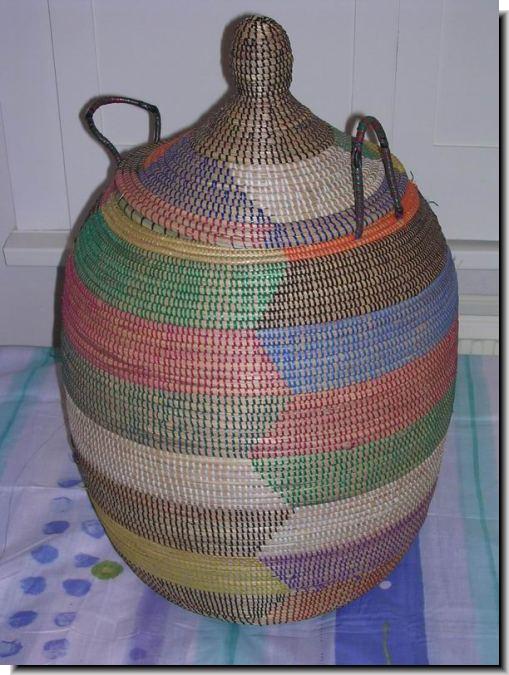
Basketware:Baskets are woven in either plain beige or intertwined using coloured strips of mostly dry palm leaves and are shaped into not only baskets but hand fans, table mats, lampshades, fruit bowls and a variety of other household objects. The craftsmen tend to be from Senegal and the quality is generally quite good.  Calabash & Gourds:
The gourd family, Cucurbitaceae, which includes the pumpkin and squash has many different uses. Before use as utensils the insides of the gourd is saturated in water and left to rot after which they are left to sun-dry which hardens them greatly. They are then used as ladles, storage containers and spoons (bottle gourd). The larger versions (called leket) are used to make food preparations and the Kora string instrument.
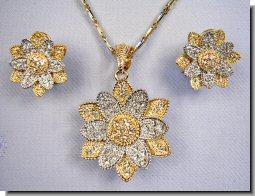
Jewellery: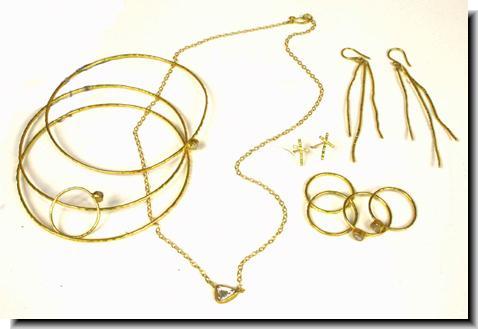 Traditionally gold and silver jewellery is made by the lower caste
of people called the tega in Wolof. The families
that are famous for making local jewellery are the Touray, (Samba) Mbow,
Jobe and Cham clans. The metals are made into bangles, bracelets, pendants,
brooches, earrings, spoons and fine rings. However, you can also see
wealthy women who go to special occasions dripping with hugely extravagant
gold jewellery which would put MR.-T to shame!
Traditionally gold and silver jewellery is made by the lower caste
of people called the tega in Wolof. The families
that are famous for making local jewellery are the Touray, (Samba) Mbow,
Jobe and Cham clans. The metals are made into bangles, bracelets, pendants,
brooches, earrings, spoons and fine rings. However, you can also see
wealthy women who go to special occasions dripping with hugely extravagant
gold jewellery which would put MR.-T to shame!Glass beads which one sees being peddled to tourists do not have Gambian origins. After Europeans began to mass manufacture them they bought them to West Africa and Gambia in exchange for slaves and gold with local chiefs.
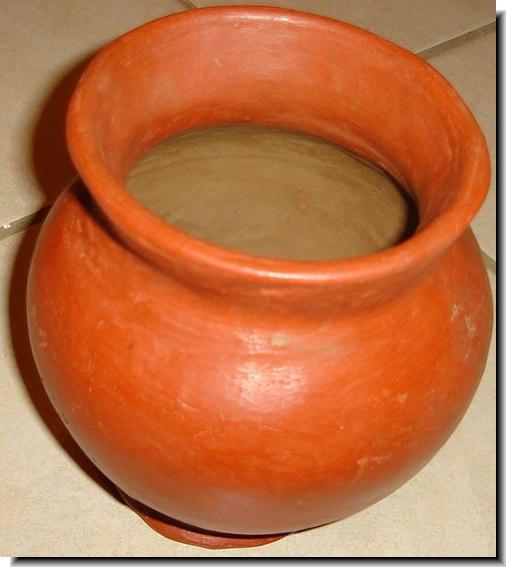
Pottery:Clay pots have been made in the Senegambia area for over 6,000 years and is the preserve of the women, with the finest examples being made by the Mandinkas, Jolas and the Serahules. This last group are mainly concentrated in the Upper River Division town of Basse and the nearby village of Alohungari where they are known to make beautifully decorated clay pots from a clay silicate mineral called kaolin (or dar) dug up from the fields or river banks. The clay is particularly suitable for making terracotta containers. 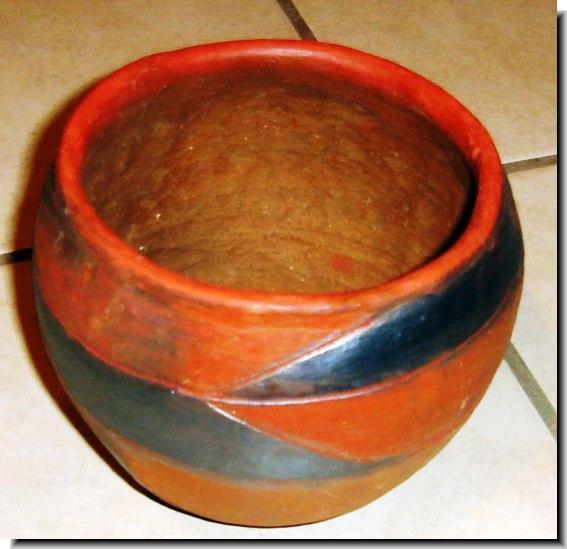 Pottery
is shaped and moulded by hand and without the use of a kiln or potter's
wheel then it is placed into a hollow in the ground where it is subsequently
fired. Many pieces are moulded to be used as water containers and coolers,
colanders, cooking pots, grain storage
jars called buntungo and for incense burning in the home.
Wood Carvings: Pottery
is shaped and moulded by hand and without the use of a kiln or potter's
wheel then it is placed into a hollow in the ground where it is subsequently
fired. Many pieces are moulded to be used as water containers and coolers,
colanders, cooking pots, grain storage
jars called buntungo and for incense burning in the home.
Wood Carvings: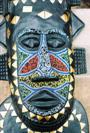 Many carvings are huge so be prepared to pay excess to get such works
back to your country. With the craftsmen of such pieces being often
Fulanis or Bambaras, many busts portray tribal
signs. For example there are magnificent pieces to be found in Brikama
market which can be more than four feet tall with scars engraved on
each cheek, temple or forehead.
Many carvings are huge so be prepared to pay excess to get such works
back to your country. With the craftsmen of such pieces being often
Fulanis or Bambaras, many busts portray tribal
signs. For example there are magnificent pieces to be found in Brikama
market which can be more than four feet tall with scars engraved on
each cheek, temple or forehead. You will often find in the craft markets stylized silhouettes and two dimensional forms. There are also carvings of scaled down pipe smoking hunters, warriors with a spear in the right hand which are made of the soft wood from the bombax or silk-cotton tree. 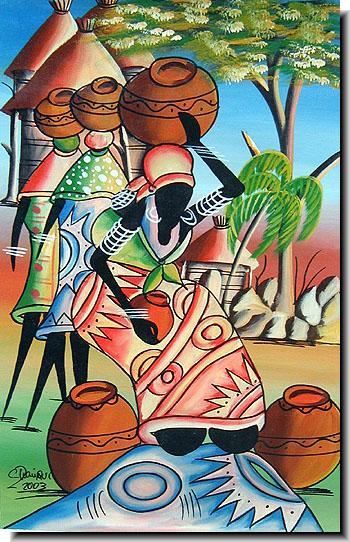 On
a more practical level there are the carvings that have more domestic
uses such as mortars and pestles, combs, djembe drums, salad bowls made
from khankhalla and paper-knives. Another example which has seen a re-emergence
is the traditional African seat which if often made of mahogany wood
locally known as (jallo). Some carvers may claim that one of their creations
is ebony but they are very often just stained black with charcoal and
in any case you can tell whether it is ebony as it is much heavier and
denser that other wood. There are also the ubiquitous forms in the shape
of elephants, antelopes with suckling fawns monkeys, crocs and hippos. On
a more practical level there are the carvings that have more domestic
uses such as mortars and pestles, combs, djembe drums, salad bowls made
from khankhalla and paper-knives. Another example which has seen a re-emergence
is the traditional African seat which if often made of mahogany wood
locally known as (jallo). Some carvers may claim that one of their creations
is ebony but they are very often just stained black with charcoal and
in any case you can tell whether it is ebony as it is much heavier and
denser that other wood. There are also the ubiquitous forms in the shape
of elephants, antelopes with suckling fawns monkeys, crocs and hippos.
 |
|||||
 |
|||||
|
|||||
| Site Map A-Z of Travel | |||||
| |
|||||
|
|
| Home
| Mobile Page |
Disclaimer
& Legal Notices | Privacy
Policy
|
|
| Copyright © 2009 Access Gambia All Rights Reserved. |