 The
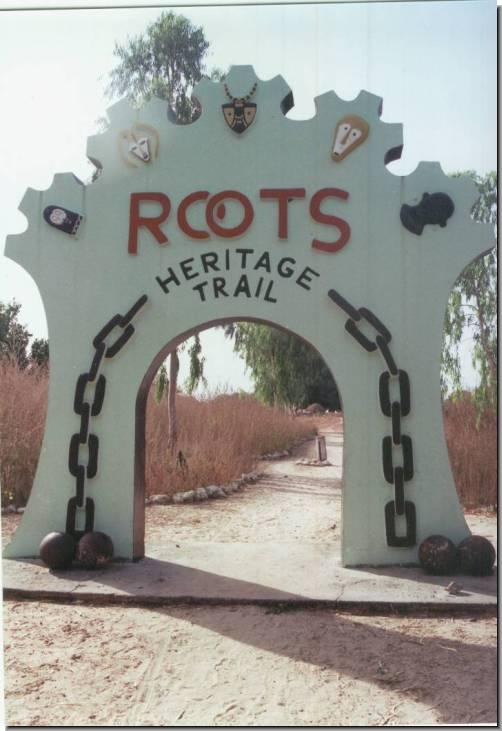
small Gambian village of Juffure (aka spelt Juffureh) became
famous in the 1970s following the television release of the bestselling
book, "Roots", written by the African-American author
Alex Haley, a descendant of Kunta Kinte. The series told the story
of Kunta Kinte's capture
in Juffure by slave traders and his subsequent enslavement in
America round 200 years ago. The
small Gambian village of Juffure (aka spelt Juffureh) became
famous in the 1970s following the television release of the bestselling
book, "Roots", written by the African-American author
Alex Haley, a descendant of Kunta Kinte. The series told the story
of Kunta Kinte's capture
in Juffure by slave traders and his subsequent enslavement in
America round 200 years ago.
According to local oral history the founder of Juffure was a man by the name of Samba Taal. When he migrated to The Gambia
to settle down in the early part of the 1500s he found the Portuguese
were already there.
was a man by the name of Samba Taal. When he migrated to The Gambia
to settle down in the early part of the 1500s he found the Portuguese
were already there.
After 1661 the local economy of Juffure was closely linked to
those of James Island. Due
to the good relations between the colonialists and the local Mandingos
the Niumi 'king' gave the British, under Major
Robert Holmes, permission to dig a water well, create gardens
and a trading post at 'Gilliflee', 'Jithrey' or 'Jillifrey'. The
Royal
African Company's employees and slaves lived there on a continuous
basis and it was used as a back-up whenever the nearby fort was
rendered uninhabitable.
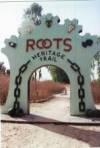 Both
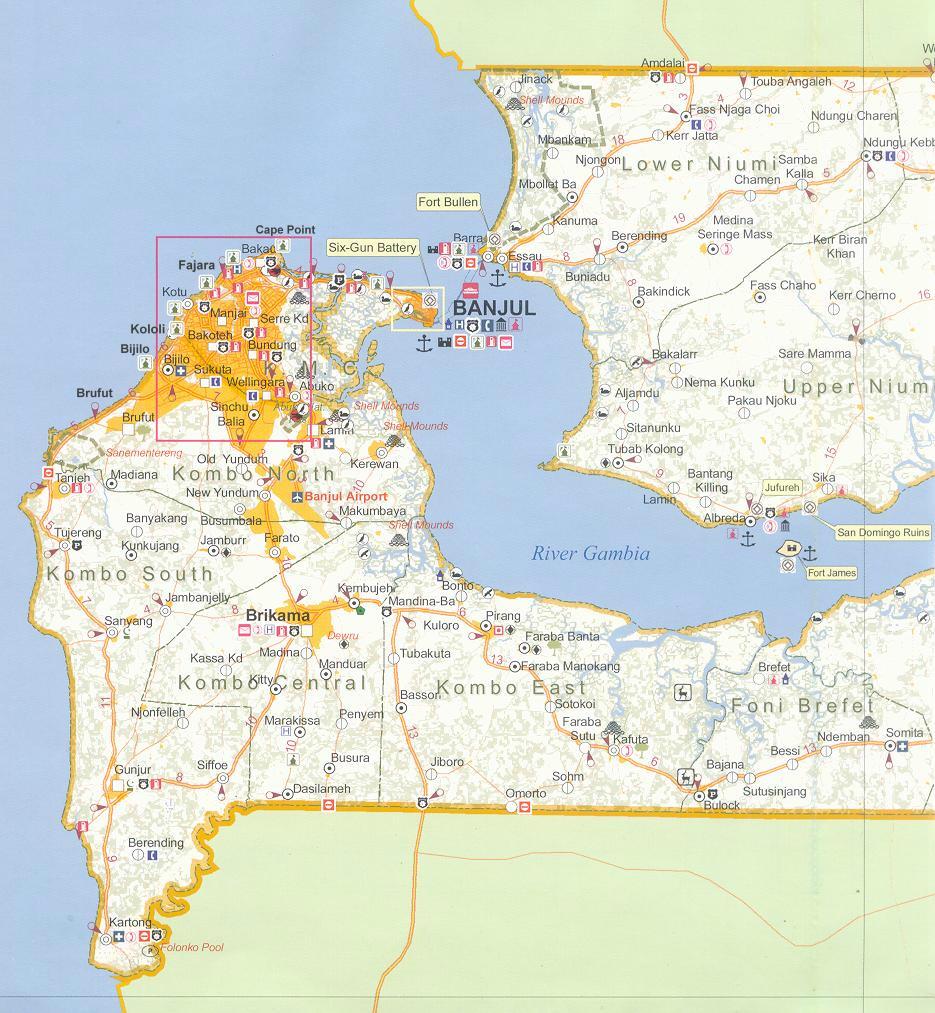
Juffure Village (Latitude: 13.339°, longitude. -16.37°, altitude
25 metres) and Albreda (aka Albadarr)
are 30km upstream in the Upper Niumi District, Western Region
(see map)
of the Gambia River and lie
just 500 metres apart on the river bank (both have now physically
merged). Both
Juffure Village (Latitude: 13.339°, longitude. -16.37°, altitude
25 metres) and Albreda (aka Albadarr)
are 30km upstream in the Upper Niumi District, Western Region
(see map)
of the Gambia River and lie
just 500 metres apart on the river bank (both have now physically
merged).
Juffure has a population estimate of 5,800 They are Serer
& Mandinka tribal villages which
have since the mid-seventies been the main tourist destination
for Roots Heritage Tours. Both are located in the Niumi
District of the north bank of the river. Very close to both villages
is James Island (which is
the colonial period ruins of a slavery station) and the 'Portuguese
chapel' of San Domingo which later came to be known as Sandi Munko
Joyo. Nearby there are also the old ruins of Maurel Freres and
the CFAO trading post.
The village can easily be reached from Banjul
and continues to draw in the tourists though now to a lesser extent.
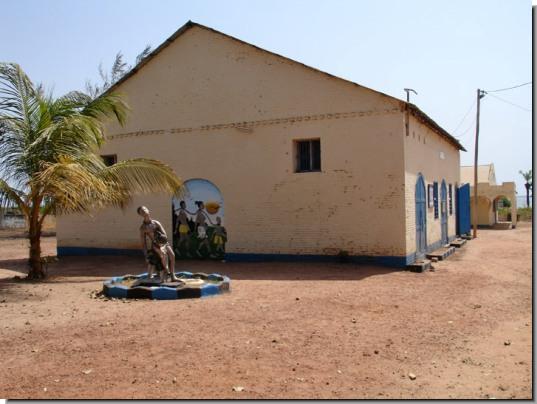
Another place worth visiting is the tranquil village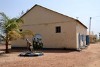 community of Albreda which is only 500 metres from Juffure and
is home to the Slavery Museum
opened in 1996 in the Maurel Fréres building
which was built by the British in the 1840's. Here you
will find some historical artifacts of enslavement on display
such as chain neck-locks, foot-locks, yokes, Kissi pennies
& Bronze Manillas as well as a comprehensive historical testament
to the diabolical trade in 'Black Ivory' which shows that 10%
to 20% of people died on the so called 'Voyage of No Return'.
Another attraction that tourists come to see in Albreda are the
ruins of the 'factory' - a fortified slaving station built by
the French in the late 17th century.
community of Albreda which is only 500 metres from Juffure and
is home to the Slavery Museum
opened in 1996 in the Maurel Fréres building
which was built by the British in the 1840's. Here you
will find some historical artifacts of enslavement on display
such as chain neck-locks, foot-locks, yokes, Kissi pennies
& Bronze Manillas as well as a comprehensive historical testament
to the diabolical trade in 'Black Ivory' which shows that 10%
to 20% of people died on the so called 'Voyage of No Return'.
Another attraction that tourists come to see in Albreda are the
ruins of the 'factory' - a fortified slaving station built by
the French in the late 17th century.
Not far is a shop selling some of the finest batik in the country.
While there take an opportunity to visit Kunta Kinte's family
relatives such as Binta Kinte,
the widow of the griot Fofana who
narrated the story of Kunta Kinte to Alex Haley. And there is
of course the ubiquitous local tourist craft
market.
 Travel Information
To get to Juffureh you can either go by organised boat trips (many
boats are for private hire at Banjul's Denton
Bridge) with a "Roots" tour
operator or take a ferry
crossing from Banjul to Barra
then proceed by taxi.
Places to Visit:
Museum at Juffure
National Museum of the North Bank
James
Island
San Domingo
CFAO building
Places to Eat:
Rising Sun Restaurant
Accommodation:
Nearest places to stay:
Jimbana Park
Kunta Kinte Roots Camp Tel: 9914508
Juffureh Rest House Tel: 9955736 / 4398439
Home At Last Motel Tel: 9926276
(Tel nos may have changed.)
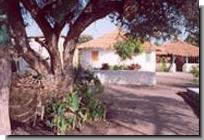
There is a new 5 star hotel being planned.
|
|
 Attractions
Nature
Reserves
Resorts

 Bakau Bakau
Banjul
Bijilo
Brufut
Cape
Point
Fajara
Gunjur
Jinack
Island
Kartong
Kololi
Kotu
Makasutu
Sanyang
Serrekunda
Tanji Village

|