The
Wolof ethnic group (or Jollof, Jolof as they are sometimes
known) in Gambia make up 16% of the population
and are the third largest ethnic
group. They are to be found in fairly large numbers in the
areas of Jokadu, Baddibu, Saloum and Niumi but the vast majority
are to be found in Senegal. The
Wolof ethnic group (or Jollof, Jolof as they are sometimes
known) in Gambia make up 16% of the population
and are the third largest ethnic
group. They are to be found in fairly large numbers in the
areas of Jokadu, Baddibu, Saloum and Niumi but the vast majority
are to be found in Senegal.
The Wolof are primarily engaged in the occupations of business
people, traders or farmers. Most people in the urban areas of
Greater Banjul and the Kombos
have adopted the Wolof language as
the Lingua Franca.
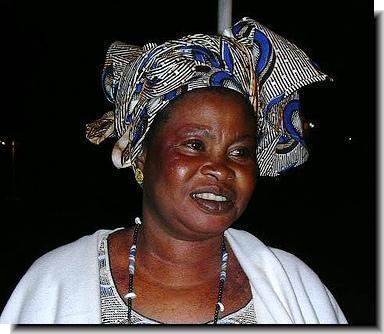
The men and in particular the women tend to dress
flamboyantly with plenty of gold jewellery (budget allowing) especially
at special occasions. They are renowned drummers (sabarr)
and dancers such as the Zimba dance
and modern Mbalax (Ndaga) music
such as that played by their most famous son Youssou N'Dur of
Senegal.
 Traditional Social Structure
The tribe has traditionally had a rigid social caste
structure though it has become slightly less so in the modern
age as education and wealth have
become increasingly important as a status symbol. Your status
did not change throughout your life irrespective of any change
in occupation.
There are 4 basic classes: Royal, Noblemen, Free-born and 'Slaves'
with further sub-divisions in each caste and marriage is strictly
within each group. The common or freemen are known as Gorr or
Jambur and the peasantry were termed Badola. The lower social
group were divided into occupations i.e. Black Smiths, Gold Smiths
known as Tega, those who worked with leather are know as Ude,
griot-like praise singers known
as Gewel and finally the 'slaves'
known as Jam.
The Gewel held a valued position in society as an oral historian
and entertainer. There job was to praise their master in public
while reciting his family lineage, advise his master on his family
traditions and generally provide entertainment for visitors.
Though the metal workers were of low status they had traditionally
been held in high regard a they made weapons of war such as spears
and knives as well as agricultural tools. They were often used
as go-betweens between quarrelsome Wolof states.
The slaves were of 2 types. Household slaves who often stayed
with the same family for many
generations and were seen as nominal members of the family and
those caught in war who were less well treated and were treated
as personal property to be bought or sold.
Political Structure
Each state of the old Jolof Empire was almost free from central
government control but they did cooperate with Burba Jollof (ultimate
ruler of the empire) on issues of mutual interest such as trade,
state defences and payment of royal taxes. The line of succession
for such local leaders was through the male descendants of the
original state founders after a casting of ballots from members
of the nobility.
|
|
 Culture
& Traditions
Culture
& Traditions
Languages

Aku
Fula
Jola
Mandinka
Serahule
Serer
Tukulor
Wolof
Other Ethnic Groups
|